Archive for month: September, 2026

One Faith, Many Nations: Why We’re Celebrating St. Michael’s Today

Happy Sunday, and Happy Parish Festival! It is my hope that everyone here will enjoy our parish festival and will
join us in celebrating the wonderful parish we have! To that end, I wish to share a personal story that will demon
strate, I think, one of the central reasons to celebrate St. Michael’s parish.
During my seminary years, I attended classes with men from all over the world. We had seminarians and profes
sors from England, Scotland, Ireland, France, Germany, Italy, Poland, Cameroon, Ethiopia, Uganda, Nigeria, Ja
pan, and so many other countries. During our time in class, we would listen to various professors lecture on theo
logical topics in Italian (and believe me when I say it was always interesting to hear professors from different
countries lecture in Italian, especially when their native language was German or French). During those years, I
recall having the distinct impression that this experience truly is Catholic, that is, it is a glimpse of the Universal
Church. Our seminary journeys had brought us all together in one place, in one faith, in order to form us for the
priesthood. Each nation had different experiences of the Faith, yet we remained together as one in our Catholic
Faith. Granted, there were times that each culture had an opportunity to express itself (e.g. each culture was invit
ed to sing Christmas songs from their country to the seminary, and, when it was our turn, we Americans dressed
up as Super Heroes to sing while Santa was escorted around the hall by the others dressed as the Secret Service
who were giving out candy), yet we were all united a single goal: Jesus Christ in our Catholic Faith.
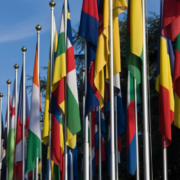
St. Michael’s, as a parish, has parishioners from the USA, Peru, Mexico, Guatemala, Togo, our local Native
American communities, and many more. St. Michael’s, therefore, is worth celebrating because it is authentically
Catholic, meaning it is a glimpse of the universality of the Church that other parishes do not always have the gift
of experiencing. I recognize that this can sometimes be a source of tension, but the truth is that this is something
that is worth celebrating. We have a parish that is home to so many nations, and these nations are joining together
for one purpose: Jesus Christ.
So please join us for our parish festival and let’s celebrate the great gift that our parish is to so many souls and,
quite literally, the world. Happy Sunday, and Happy Festival Day!!

¡Feliz domingo y feliz fiesta parroquial! ¡Espero que todos los presentes disfruten de nuestra fiesta parroquial y se unan
a nosotros para celebrar la maravillosa parroquia que tenemos! Con este motivo, deseo compartir una historia personal
que, a mi parecer, ilustra una de las razones fundamentales para celebrar la parroquia de San Miguel.
Durante mis años de seminario, asistí a clases con hombres de todo el mundo. Había seminaristas y profesores de Ingla
terra, Escocia, Irlanda, Francia, Alemania, Italia, Polonia, Camerún, Etiopía, Uganda, Nigeria, Japón y muchos otros
países. En clase, escuchábamos a diversos profesores disertar sobre temas teológicos en italiano (y créanme cuando di
go que siempre resultaba interesante oír a profesores de distintos países impartir sus lecciones en italiano, sobre todo
cuando su lengua materna era el alemán o el francés).
Recuerdo que, durante aquellos años, tuve la clara impresión de que esta experiencia era verdaderamente católica; es
decir, un reflejo de la Iglesia universal. Nuestra formación en el seminario nos había reunido a todos en un mismo lugar
y en una misma fe para prepararnos para el sacerdocio. Aunque cada nación vivía la fe de manera distinta, permanecía
mos unidos como uno solo en nuestra fe católica. Es cierto que hubo momentos en los que cada cultura tuvo la oportu
nidad de expresarse —por ejemplo, se invitaba a cada grupo a cantar villancicos de su país; cuando nos tocó el turno a
nosotros, los estadounidenses, nos disfrazamos de superhéroes para cantar mientras otros compañeros, vestidos como
agentes del Servicio Secreto, escoltaban a Santa Claus por el salón y repartían dulces—, pero todos estábamos unidos
por un único objetivo: Jesucristo en nuestra fe católica.
Como parroquia, St. Michael’s cuenta con feligreses provenientes de Estados Unidos, Perú, México, Guatemala, Togo,
nuestras comunidades nativas americanas locales y muchos lugares más. Por ello, St. Michael’s es motivo de celebra
ción, ya que es auténticamente católica; esto significa que ofrece un reflejo de la universalidad de la Iglesia, un don que
no todas las parroquias tienen la oportunidad de experimentar. Reconozco que esto puede generar tensiones en ocasio
nes, pero lo cierto es que es algo digno de celebrarse. Tenemos una parroquia que acoge a personas de tantas naciones,
y todas ellas se unen con un mismo propósito: Jesucristo.
Así que, por favor, acompáñenos en nuestra fiesta parroquial y celebremos el gran regalo que nuestra parroquia repre
senta para tantas almas y, literalmente, para el mundo. ¡Feliz domingo!

Bulletin 09-27-2026

Christ at the Center: A Reflection on Mass at the High Altar

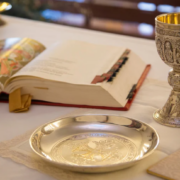
Happy Sunday! In preparation for the parish festival, I want to take this time to offer a reflection on the celebration
of the Mass ad orientem (meaning “to the east”) using the High Altar of St. Michael’s Church for the Masses of
fered on the weekend of our parish festival (September 26-27). Please note that this is NOT a permanent change.
We are only offering Masses on the High Altar because it is the altar that was consecrated for our parish church. It
is important to respect and honor the patrimony of our parish, and for this reason, I asked Fr. Bill to join me in offer
ing Mass at the High Altar. With this in mind, I want to offer three perspectives that I believe will be helpful to ori
ent our understanding of the Mass.
First, ad orientem means that we face “Liturgical East” (meaning the rising of the Son) together. Even though our
church faces west, it is the act of facing Christ together that unites our prayer. This serves as a reminder that Christ
is the one who has brought us together as a parish family. Christ is the one who unites us in himself, and facing him
together, as a parish family, is precisely the symbolism that is meant to be expressed in our Sunday Masses.
Second, ad orientem requires the use of the High Altar of St. Michael’s. This altar is the altar that contains the relics
of various saints (see my bulletin article from two weeks ago), and it is the altar that was consecrated for our parish.
With that in mind, the goal of using the High Altar is to offer Mass with the express presence of the saints whose
relics are in that altar while celebrating the fact that this very altar was made for and consecrated for this parish. It is
a way to honor the patrimony and history of the parish while remaining united to the ever-present sacrifice of Christ
in union with the saints, especially those whose relics are contained in that altar.
El próximo 27 de septiembre no tendremos clases de catecis
mo debido a que estaremos celebrando el festival de la parro
Finally, ad orientem serves as a beautiful reminder that Christ is the focus of the Mass. It is tempting to make
the priest the focus of the Mass, but this is not the case. The priest is a priest for us and a Christian with us.
The priest, therefore, is never the center of the Mass: Christ is. It is his sacrifice and his life given for us that
we adore and receive, and how beautiful it is that we can do so on our parish High Altar.
Please join us for our parish festival September 25-27, and remember that Mass on the 27th will be a beautiful op
portunity to adore the Lord together as one parish family united in the Lord. Happy Sunday!

¡Feliz domingo! Con miras a la fiesta parroquial, deseo aprovechar este momento para ofrecer una reflexión sobre la
celebración de la Misa ad orientem (que significa «hacia el oriente»), utilizando el Altar Mayor de la iglesia de San
Miguel para las Misas que se celebrarán el fin de semana de nuestra fiesta parroquial (26 y 27 de septiembre). Cabe se
ñalar que este NO es un cambio permanente. Celebraremos las Misas en el Altar Mayor únicamente porque es el altar
que fue consagrado para nuestra iglesia parroquial. Es importante respetar y honrar el patrimonio de nuestra parroquia
y, por ello, le pedí al P. Bill que me acompañara a celebrar la Misa en el Altar Mayor. Teniendo esto en cuenta, quiero
ofrecer tres perspectivas que considero útiles para orientar nuestra comprensión de la Misa.
En primer lugar, ad orientem significa que miramos juntos hacia el «Oriente litúrgico» (es decir, hacia la salida del
Sol). Aunque nuestra iglesia esté orientada hacia el oeste, es el acto de mirar juntos a Cristo lo que une nuestra oración.
Esto nos recuerda que es Cristo quien nos ha reunido como familia parroquial. Cristo es quien nos une en sí mismo, y
mirarlo juntos, como familia parroquial, es precisamente el simbolismo que se pretende expresar en nuestras Misas do
minicales.
En segundo lugar, la celebración ad orientem requiere el uso del altar mayor de San Miguel. Este es el altar que con
tiene las reliquias de diversos santos (véase mi artículo en el boletín de hace dos semanas) y el que fue consagrado para
nuestra parroquia. Teniendo esto en cuenta, el objetivo de utilizar el altar mayor es celebrar la Misa con la presencia
explícita de los santos cuyas reliquias se encuentran en él, al tiempo que se conmemora que dicho altar fue construido y
consagrado específicamente para esta parroquia. Es una forma de honrar el patrimonio y la historia de la parroquia,
manteniéndose unidos al sacrificio de Cristo —siempre presente— en comunión con los santos, especialmente con
aquellos cuyas reliquias alberga el altar.
Por último, la orientación ad orientem sirve como un hermoso recordatorio de que Cristo es el centro de la Misa. Es
tentador hacer que el sacerdote sea el centro de la Misa, pero no es así. El sacerdote es sacerdote para nosotros y cris
tiano con nosotros. Por tanto, el sacerdote nunca es el centro de la Misa: lo es Cristo. Es su sacrificio y su vida entrega
da por nosotros lo que adoramos y recibimos; y qué hermoso es que podamos hacerlo en el altar mayor de nuestra pa
rroquia.

Bulletin 09-20-2026

Living Martyrdom and the Power of Love: Lessons from Pope Benedict XVI

Happy Sunday! Before we launch into a catechesis on the Virtues, I want to take this opportunity to offer the words
of Pope Benedict XVI on martyrdom. This homily, quoted in part here, was given at the Basilica of St. Bartholomew
on Tiber Island in Rome, Italy, on April 7, 2008. It is worth noting because, at the base of our reflections on the vir
tues will be the foundation of self-denial in order to follow Christ more closely. This leads, then, to a certain “living
martyrdom” that, in today’s world, can be difficult to understand. So with that in mind, here is Pope Benedict XVI’s
brief words on martyrdom for Christ:
Let us ask ourselves: why did these martyr brothers and sisters of ours not seek to save the irreplaceable good of
life at all costs? Why did they continue to serve the Church in spite of grave threats and intimidation? In this Basili
ca where the relics of the Apostle Bartholomew are preserved and the mortal remains of St Adalbert venerated, we
hear the resonance of the eloquent witness of those who, from the very beginning of the Church, put love into prac
tice, offered their lives to Christ in martyrdom.
In the icon set above the main altar the words of the Book of Revelation stand out: “These are they who have
come out of the great tribulation” (Rv 7: 13). The old man who asks who the people dressed in white are and where
they came from is told: “They have washed their robes and made them white in the blood of the Lamb” (Rv 7: 14).
At first it appears a strange answer. However, in the coded language of the Apostle John, it contains a precise ref
erence to the clear flame of love that impelled Christ to pour out his blood for us. By virtue of that blood, we have
been purified. Sustained by that flame, the martyrs too poured out their blood and were purified in love: in the love
of Christ who made them capable of sacrificing themselves for love in their turn. Jesus said: “Greater love has no
man than this, that a man lay down his life for his friends” (Jn 15: 13). Every witness of faith lives this “greater love”
and, after the example of the Divine Teacher, is ready to sacrifice his life for the Kingdom. In this way we become
friends of Christ and accept the extreme sacrifice without limiting the gift of love and the service of faith.
It is true: it seems as though violence, totalitarianism, persecution and blind brutality got the upper hand, silencing
the voices of the witnesses to the faith who humanly speaking appeared to be defeated by history. But the Risen
Jesus illuminates their testimony and thus we understand the meaning of martyrdom. Tertullian says of this: “Plures
efficimur quoties metimur a vobis: sanguis martyrum semen christianorum – Our numbers increase every time we
are cut down by you: the blood of martyrs is the seed of [new] Christians” (Apol. 50, 13; CCC, PL 1,603). A force
that the world does not know is active in defeat, in the humiliation of those who suffer for the Gospel: “for when I
am weak”, the Apostle Paul exclaims, “then I am strong” (II Cor 12: 10). It is the power of love, defenceless and
victorious even in apparent defeat. It is the force that challenges and triumphs over death.

¡Feliz domingo! Antes de comenzar una catequesis sobre las virtudes, quiero aprovechar la oportunidad para compartir las pala
bras del Papa Benedicto XVI sobre el martirio. Esta homilía, citada aquí parcialmente, fue pronunciada en la Basílica de San Bar
tolomé, en la Isla Tiberina de Roma (Italia), el 7 de abril de 2008. Cabe destacarla porque, en la base de nuestras reflexiones sobre
las virtudes, se encontrará el fundamento de la renuncia a uno mismo para seguir más de cerca a Cristo. Esto conduce, pues, a una
especie de «martirio vivo» que, en el mundo actual, puede resultar difícil de comprender. Así pues, teniendo esto en cuenta, aquí
presentamos las breves palabras del Papa Benedicto XVI sobre el martirio por Cristo:
Preguntémonos: ¿por qué estos hermanos y hermanas nuestros, mártires, no buscaron salvar a toda costa el bien insustituible de la
vida? ¿Por qué siguieron sirviendo a la Iglesia a pesar de las graves amenazas y la intimidación? En esta basílica, donde se conser
van las reliquias del apóstol Bartolomé y se veneran los restos mortales de san Adalberto, resuena el elocuente testimonio de aque
llos que, desde los inicios mismos de la Iglesia, pusieron el amor en práctica y ofrecieron su vida a Cristo en el martirio.
En el conjunto de iconos situado sobre el altar mayor destacan las palabras del libro del Apocalipsis: «Estos son los que vienen de
la gran tribulación» (Ap 7, 13). Al anciano que pregunta quiénes son las personas vestidas de blanco y de dónde han venido, se le
responde: «Han lavado sus vestiduras y las han blanqueado en la sangre del Cordero» (Ap 7, 14). A primera vista, parece una res
puesta extraña. Sin embargo, en el lenguaje simbólico del apóstol Juan, encierra una referencia precisa a la llama viva del amor
que impulsó a Cristo a derramar su sangre por nosotros. En virtud de esa sangre, hemos sido purificados.
Sostenidos por esa llama, también los mártires derramaron su sangre y fueron purificados en el amor: en el amor de Cristo, que los
hizo capaces de sacrificarse a su vez por amor. Jesús dijo: «Nadie tiene mayor amor que el que da la vida por sus amigos» (Jn 15,
13). Todo testigo de la fe vive este «amor mayor» y, siguiendo el ejemplo del Divino Maestro, está dispuesto a sacrificar su vida
por el Reino. De este modo nos convertimos en amigos de Cristo y aceptamos el sacrificio supremo, sin poner límites a la entrega
del amor ni al servicio de la fe.
Es verdad: parece como si la violencia, el totalitarismo, la persecución y la brutalidad ciega hubieran prevalecido, silenciando las
voces de los testigos de la fe que, humanamente hablando, parecían derrotados por la historia. Pero Jesús Resucitado ilumina su
testimonio y así comprendemos el sentido del martirio. Tertuliano dice al respecto: «Plures efficimur quoties metimur a vobis: san
guis martyrum semen christianorum —Somos más numerosos cada vez que somos segados por vosotros: la sangre de los mártires
es semilla de [nuevos] cristianos—» (Apol. 50, 13; CCC, PL 1,603). Una fuerza que el mundo desconoce actúa en la derrota, en la
humillación de quienes sufren por el Evangelio: «cuando soy débil», exclama el apóstol Pablo, «entonces soy fuerte» (2 Cor 12,
10). Es el poder del amor, indefenso y victorioso incluso en la aparente derrota. Es la fuerza que desafía a la muerte y triunfa sobre
ella.

Bulletin 09-13-2026

Bulletin 09-06-2026